Showing posts with label Tai Chi. Show all posts

Monday, November 7, 2016

Tai Chi and Knee Pain

-->
In previous posts I’ve mentioned that over the past few years it’s become increasingly common for Tai Chi practice to be recommended as a form of physical therapy for patients suffering from an assortment of ailments. However, as with any form of exercise, Tai Chi practice can cause more harm than good if done improperly.
The American Academy of Orthopedics Surgeons has previously indicated that knee injuries constitute the largest category of injury in the US. In their book, Save Your Knees, Fox and McGuire estimate that 1 in every 4 Americans have suffered knee pain or injuries. Tai Chi’s slow measured movements and focus on relaxation would therefore seem to be the ideal cure for this rampant condition. That's why it's such a surprise then to find that there are claims and reports of a prevalence of knee injuries among American Tai Chi practitioners.
Most people who claim that there is such a rampant occurrence of knee injuries among Tai Chi practitioners cite Dr. Jay Dunbar’s 1991 doctoral thesis, wherein 60% of the 216 Tai Chi teachers surveyed stated that they, and/or their students, suffered from knee injuries. To date I have not found any other study to corroborate these claims, nor have I personally observed any such prevalence of knee injuries among experienced practitioners. However I have observed several Tai Chi demonstrations wherein students bend and move their legs in ways that are, without a doubt, causing them to strain their knees. In The Complete Book of Tai Chi Chuan, Wong Kiew Kit states his belief that this is a phenomenon unique to American practitioners, and one likely due to improper form and faulty teaching; I believe that he is correct.
Among my students many arrive to their first class complaining of different health problems, and yes knee pain is fairly common among them. However, after training for a few months these health issues generally fade away or drastically improve. One issue that has popped up occasionally is unexpected joint pain or soreness among students who’ve been practicing for a few years. They complain that their joints sometimes feel sore after pushing hands or forms practice. This is an immediate red flag; these are people who’ve over come joint injuries that plagued them for year thanks to their diligent Tai Chi practice. Suddenly feeling sore after class means something is very wrong.
I always remind these students that one of the most important parts of correct Tai Chi practice is listening, specifically to their own bodies. Any sudden joint pain or soreness is their body letting them know that they are doing something wrong. If they don’t listen and insist on trying to push past the pain they will only injure themselves, possibly permanently. So I have them run through their practice until they can pinpoint what movements or posture are causing them pain. I have them freeze in the position where is hurts and then take a look at themselves. Where does it hurt? What is supporting, or being supported by the body part in pain? They very quickly realize that the pain and soreness are being caused by either improper body alignment or excessive muscular strain. Once they correct this the pain suddenly disappears. In other words if they relax, listen and fix their practice the pain suddenly goes away; trying to push through the pain was only making things worse and going completely against the core principles of Tai Chi.
The most common problem I’ve seen is that students try to shift their weight while 1-straining their muscles to hold a low stance and 2- shearing their knees because their legs aren’t properly aligned. To address this:
1-Always remember the Tai Chi principle, “use 4 ounces to overcome 1 thousand pounds”. Simply put, if your body is relaxed and properly aligned you will never need to strain your muscles to generate or redirect great force. However this requires the practitioner to maintain muscular relaxation and mindfulness when they face heavy pressure. It’s hard to condition the mind to adopt this as a response to external pressure, so most students fall back into the habit of trying to use brute strength and hurt themselves in the process. Always remember: Song (Relax), when you face pressure relax your body and focus on maintaining proper body alignment. Any external pressure will slide right off you that way.
2- Speaking of proper body alignment, remember to rotate and shift your weigh with your hips. Make sure your knees are always aligned with your feet. Never let your knees bend past your toes, and preferably keep your knees bent directly above your metatarsals (the center of your foot). When shifting your weight rotate from the hip, never from your ankles or knees. (For a more in depth discussion refer to my post on the Six Harmonies principle).
These two reminders alone solve about 90% of my student’s complaints. It would also fix most of the problems I’ve seen with the demonstrations I previously mentioned. This all leads me to conclude that Wong Kiew Kit is correct in his assessment that too many students are failing to apply proper Tai Chi principles and their teachers are failing to correct them, either because they don’t know any better or because they are inattentive of their students. Either way as a student and a person always remember to be mindful of, and listen to, your body; ultimately it’s your responsibility and you are the one that will pay the penalty for any wrong moves you make. Relax and listen to what your body is trying to tell you, that is always your best guideline.

Wednesday, February 26, 2014

Benefits of Tai Chi for Parkinson’s Patients


          Over the past decade, a lot of medical research been performed to identify the benefits of Tai Chi for health. Numerous benefits have been identified for people of all walks of life, ranging from stress reduction, improved posture, balance, etc. However more exciting still has been the research done into the benefits of Tai Chi for people who suffer from specific health issues, particularly chronic conditions. In this respect, Tai Chi has a lot to offer as a form of integrated therapeutic treatment.
          
          Specifically, an article was published in the New England Journal of Medicine (2012) regarding the findings of a trial performed on Parkinson’s patients who practiced Tai Chi. This trial was designed to test whether Tai Chi practice could improve postural control in patients with idiopathic Parkinson’s disease. A short program was designed for the 195 trial patients (patients ranged from mild to all but the most severe forms of the condition). Practice was performed over one hour sessions, twice a week for 6 months.

          Two other comparison groups were given resistance-training and stretching (respectively), which are the most common therapeutic treatments currently offered for Parkinson’s patients. The Tai Chi group performed consistently better than both the resistance-training and the stretching groups. The Tai chi group also showed a marked decrease in the incidence of falls. As a result of these and other findings Tai Chi has begun to see a sudden surge of interest as a form of Parkinson’s treatment.

          Having worked with Parkinson’s patients on a one-on-one basis previously, I was recently contacted by the Puerto Rico Parkinson Foundation to offer weekly Tai Chi practice to patients at their facilities. Though the practice is still in the early stages I’ve been able to personally observe an improvement in their walking gate and their balance. Patients with more severe conditions have shown an improvement in their posture and flexibility, but are still having trouble with fine motor movements both in their stepping and hand movements.

          This last point has given me some concern as more advanced Tai Chi practice later on will demand greater precision in their movements. I worry that because they will have additional struggles with their practice the more severe patients may grow frustrated and give up. For them I believe that an encouraging atmosphere and positive reinforcement will prove the best motivator to help them continue their practice so they can derive the full benefits of the art. Luckily the members of the Foundation are very supportive of their efforts. Overall I am pleased with their progress and very pleased to have the opportunity to work with them. They are a wonderful group, always cheerful and very persevering.

          If you are a patient of Parkinson’s, or know someone who is, the practice of Tai Chi is worth considering as a form of complementary treatment. Search around and you may find a group near you that can help.

Saturday, July 6, 2013

The Benefits of Tai Chi Chuan

I was recently asked to give a presentation on some of the benefits of practicing Tai Chi Chuan so I’m posting a condensed version of that speech. I hope this will give potential students the extra kick they need to finally get up off their butts and start practicing.
          Some of you may have heard about Tai Chi from a friend or a doctor who recommended it for it’s health benefits. Others may have noticed signs for classes at a local gym or seen a group practicing in a nearby park. Maybe you saw Tai Chi being practiced in a martial arts film. This probably led you to ask: “What is Tai Chi? What good can it do me? Is it hard to practice?”
            The usual explanation is that Tai Chi is an ancient Chinese martial art, which uses slow graceful movements to relax the body and tone the muscles while focusing the mind and boosting the spirit. This probably led you to a simple reaction: “What the hell does any of that mean?” Not only did you not get any of your questions answered but now you’re seriously confused. This is where most people say: “screw it!” and forget about the whole thing. I’d like to address some of these questions so you can decide for yourselves whether or not Tai Chi is right for you.
            Tai Chi Chuan is a martial art based on several Taoist principles; which, again, sounds very foreign but let’s take a look at what it means. Taoism is one of the oldest philosophical belief systems in China (and the world). Basically it’s a philosophy that values personal freedom, simple joys, and living a life in harmony with nature. Nothing particularly complicated about that. Taoists believe that the world exists as a manifestation of opposing and complementary forces known as Yin and Yang. The state of harmonious and balanced exchange between these two forces is known as Tai Chi. Tai Chi Chuan (or Taiji Quan) is a martial art based on following this principle of balanced, complementary forces. One way of seeing this in action is during practice when you’ll notice that as we perform Tai Chi Chuan one limb will straighten and the muscles stretch while the opposite limb will bend and the muscles will relax; opposite and complementary.
            This leads me to the second question: what are the benefits of Tai Chi Chuan practice? The benefits are seemingly endless. Traditional Chinese medicine practitioners have been recommending Tai Chi Chuan practice for centuries to cure an endless assortment of ailments. Over the past few decades Western medicine has begun to experiment with Tai Chi Chuan practice and been amazed with just how successfully it works as a complementary treatment for an ever-growing list of conditions and diseases[1].
            At a very simple level Tai Chi Chuan is wonderful in that it uses slow focused movements emphasizing balance, posture, coordination, and slow steady breathing. It gently stretches and relaxes the muscles, which helps to reduce stress while strengthening the muscles and joints (which help knee and back injuries). It’s slow movements offers a low impact form of exercise while offering an excellent cardio workout. The deep, gentle breathing helps maximize blood oxygenation and the release of endorphins, all of which help to improve circulation, digestion, and blood pressure.
Practice also helps to improve posture, balance, and coordination while exercising the body and mind. Its gentle, elegant movements look graceful (generally described as poetry in motion) and grant a sense of calm relaxation, while generating a quiet sensation of power that can be readily seen in action when applied to self-defense.
            Lastly Tai Chi Chuan is being used as a component in treating a myriad assortment of diseases and condition such as: hypertension, diabetes, rheumatism, asthma, arthritis, Alzheimers’s, gastritis, Parkinson’s, insomnia, migraines, depression, assorted heart conditions, etc. Science is still actively researching new and unexpected benefits of Tai Chi Chuan. In summation, I can’t think of anyone who would not benefit from Tai Chi Chuan practice.
            In regards to the final question: no, Tai Chi Chuan is not hard to practice. You don’t need special clothes or expensive equipment. You don’t need any special courts or areas; you can practice anytime, anywhere. Practice can be adapted to varying levels of difficulty so that beginners and advanced students can all practice together by using different variations of the same techniques to suit their level of skill. Most often Tai Chi Chuan will be practiced in parks, at the beach or some other place where students can enjoy a natural view to help them relax and focus on their practice, but many practice in their living rooms before starting out their day. It’s truly a wonderful practice that can help any one, whether you only practice for fifteen minutes in the mornings or a few hours by the sunset. There really is no excuse to keep you from reaping the benefits of Tai Chi Chuan practice, so give it a try.


[1] Complementary means just that, complementary. I’m not espousing Tai Chi Chuan as a magic potion that will cure all your troubles. The medical community is using it as a powerful component of treatment, not as an entire form of treatment in and of itself.

Friday, October 12, 2012

Puerto Rico Martial Arts Get Together 2012

Greeting to all! I just wanted to let everyone know that the Puerto Rico Martial Arts Get Together 2012 will be taking place this sunday at Cancha Pancho Deida in Hatillo. It's located right next to the Colisseum beside Carr. #2. Just in front of Hatillo Cash & Carry. This event will begin at 9AM. One of our instructors will be giving a short demonstration during the morning and this event will feature all sorts of stylists from around the island. The event is free of charge and designed to promote mingling and networking between schools, students and teachers so whatever your interest in the martial arts please feel free to stop by.

Wednesday, October 26, 2011

Wanna learn?


If you are interested in attending a class my current group is meeting at "El parque del indio" in Condado on thursdays at 5:30 p.m. and saturdays at 8:30 a.m. For more information write me an email at yinyangtaopr@gmail.com or joncarlobetancourt@yahoo.com.

Wednesday, October 12, 2011

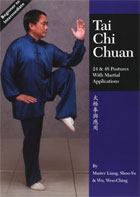
Tai Chi Chuan- 24 & 48 Postures With Martial Applications - Book Review


Tai Chi Chuan- 24 & 48 Postures With Martial Applications
by Master Liang, Shou-Yu & Wu, Wen-Ching

As part of our efforts to revitalize the blog I'll begin periodically recommending some helpful books. To begin I've chosen one of the first Tai Chi books I read. This book by Master Liang is a great reference tool and is especially helpful for beginners who want to perfect their stances and get a basic idea of some of the applications for the form movements.

Initially the book gives a brief, overall description of Tai Chi theory. It covers basic breathing methods and includes several illustrations of some basic energy channels and accupoints. It then goes on to give a brief history of the art and its development. It then goes on to give some basic guidelines for practitioners to follow. They're very general pointers that mostly echo the Eight Body Methods and the Song of the Thirteen Postures, but a reminder is never a bad thing.

After this the author gives detailed explanations of the many body postures employed in Tai Chi's forms including several photographs to help students get a full understanding of how to adopt the posture, and then how to transition from one posture to the another. This is easily one of the most valuable parts of the book since one of the most important (and most difficult to grasp) parts of Tai Chi are the transitions between the postures. Transitions between postures are never easy to display and are especially difficult to show in a book. That said the author does an admirable job in giving detailed written explanations of how to execute said transitions.

Lastly, the book offers some basic applications for the movements in the 24 form. The transitions have fewer pictures and the applications are very basic, but for beginners it helps to offer them some simple examples of what they can do. Sadly Tai Chi Chuan is rarely taught with any emphasis on its martial aspects. This is a major problem not only in that it greatly reduces depth to which the student can learn, but it also castrates the form, making it impossible for students to learn how to defend themselves. While some students (and sadly many teachers) are willing to forego any knowledge as to the arts martial aspects they fail to appreciate how detrimental this lack of knowledge is to the performance of the form. Knowing the applications that the movements are designed to execute is precisely what dictates how the movement must be performed during form practice. Without this knowledge the movements will invariably be clumsy, incomplete and possibly detrimental.

I've personally borne witness to instructors who've practiced the form for years without ever developing any knowledge as to the applications those movements are designed for. As a result they tend to have problems establishing a firm root and correct body alignment. When they and their students perform the movements incorrectly they torque their knees, wobble on misaligned hips and ankles, have poorly distributed weight causing them to be unbalanced (and sometimes fall), etc. In essence their lack of understanding results in incorrect movements that harm rather than help the practitioners. For this reason alone this (albeit brief) portion of the book alone makes it a very worthwhile read, especially for beginners.

In summary it's a great read. It offers the beginner a good introduction to several aspects of the art and it offers more advanced practitioners a quick reference to some of the basic aspects and movements of the art.

Saturday, September 17, 2011

Team Championship Cup


I was very happy when in 2006 I became part of the Puertorican team that went to Zheng Zhou, China to compete in the 2nd World Traditional Wushu Championship. The entire trip is full of very fond memories that I will forever cherish, both on and off of the competition floor.

As for the Championship itself it consisted of a week's worth of events and activities culminating in the team choreography events. Our team had done fairly well during the individual events, taking several bronze, silver and even a few gold medals. (I was very honored to receive silver in hand forms and bronze in weapons forms.) At last it was time for the final event and all the different teams gathered together to perform their routines before an unexpected group of guest judges including Wu Bing and Li Deiyin.

This really put all of the teams on their toes and us in particular as the routine our team would be performing was one created by Master Li Deiyin, the well known Tai Chi Kung Fu fan routine. Despite having a major musical malfunction (the sound system died halfway through our routine) we didn't miss a beat. What was truly amazing was that the crowd was so exited that they started singing and clapping their hands to the beat to cover the silence when the music died! Hearing the whole stadium singing and clapping was truly amazing. We were exceptionally pleased with how things went and incredibly shocked when were told we'd one. Then the camera crews came over and everything after was very much a blur, but it truly was magical. It was an experience I'll treasure for the rest of my life.

Moving Backwards

Once students have learned to move forward the next direction I'll begin showing them how to move in is backwards. This is usually a bit trickier, so much so that I've even met some instructors who struggle with it themselves.

To begin adopt an empty or insubstantial stance (known as Xubu). For this example we'll assume the front leg is the left and the rear leg is the right. The rear knee should be bent and the rear foot turned out slightly (about 45 degrees). The front knee is also bent with the front foot in front of the back foot. The front foot will only touch down with the ball of the foot. It is important to put no weight on the front foot and to keep this leg very relaxed. The front foot is kept empty of any weight (hence the name of the stance). All of the weight should be on the rear leg and the torso should be facing completely towards the same side as the rear leg (i.e. if your rear leg is your right leg your torso should be facing to the right).

From this stance bring the front leg back smoothly until it's slightly behind the right leg. How far back you bring the leg depends on personal preference and the conditions you are in, however it must be farther back than your huiyin cavity. I usually have my students take a normal step back the way they regularly would while walking and then have them use that distance as their measurement. Having brought the left foot back it is important that just as that leg was only touching down with the ball of the foot in front it again lands with only the ball of the foot behind us (still with no weight on it).

Now for the tricky part, push down with the right foot while twisting the hips to the left. This will make your torso move from facing to the right it will now face to the left. However as your hips twist shift your weight from the right leg to the left leg (which is now behind the right). To be able to shift the weight smoothly you must lift up the right heel (so that only the ball of the right foot is on the ground) while simultaneously allowing the left heel touch down. You're essentially rocking the weight from one leg to the other on the balls of your feet and slowly transferring all the weight to the left leg as the heel comes down. It's very important that during this twisting movement you pay attention to the bending of the knees, making sure that you maintain the same height throughout the movement. You should now have all the weight on the left leg with the right empty so that you are once again in an empty stance, but on the opposite side. To continue moving backwards repeat the process on the other side.

Friday, September 16, 2011

Wanna learn?


If you are interested in attending a class my current group is meeting at "El parque del indio" in Condado, tuesdays and fridays at 6:00 p.m. For more information write me an email at yinyangtaopr@gmail.com or joncarlobetancourt@yahoo.com.

Saturday, August 13, 2011

Tai Chi Walk (Forward)


Some of my newest students have been working on Tai Chi Walk so I thought it'd be a good time to touch on the subject.

Tai Chi walk is the next step in training I give my students after Zhang Zhuang* practice. As previously stated Zhang Zhuang teaches the student about establishing a stable center, therefore the next step is learning to move in the four cardinal directions while maintaining that stability.

Initially, this proves to be a very difficult progression for most students and entails a LOT of practice. To help them in said practice I'll detail just how it is performed.

For now I'll be focusing on the first direction I train my students in, forward. To begin they let their weight sink onto one leg, emptying the other of weight. (It is important that both knees stay bent at this point.) Next they stretch out the empty leg letting it land heel first in front of them, it's important to note that the foot seems to land slightly outside so as to maintain the width between the feet (remember, shoulder width apart at all times). Once the heel lands the weight is slowly, gently transferred onto the forward leg as the back leg's knee straightens (driving the body's weight forward). The forward knee should be bent, without moving farther forward than the toes. The student should now be in gongbu or bow stance. The weight should be about 70% on the front leg and 30% in the back.

Then the hips will rotate, from facing straight ahead, 45 degrees into the direction of the lead leg (ie if your front leg is the left leg you rotate your hips 45 degrees to the left). The power for this rotation again comes from the rear leg. The toes should dig into the ground (like you're squishing something) and the rear heel is elevated, pivoting on the toes. It is vital at this point to shift all of the body's weight onto the front leg (emptying the rear leg of ALL weight) and immediately lift the back leg, bringing it forward free of weight. In this way the practitioner's body will be in a mirror position from what he/she began in. It is very important to always keep the lead knee bent once the weight has been placed on it, otherwise the student's body will bob up and down and they'll likely lose their balance.

After the movement is complete simply repeat on the opposite side to continue moving forward.

Here's a video link on how the forward stepping is performed.


*For more on Zhan Zhuang.

Monday, June 28, 2010

Stances

Training stances is usually considered a boring practice, and most teachers no longer emphasize it as was traditionally done. Why? Because for a beginner it IS boring! No one can argue that stances are a fun practice for beginners. However I'd like to remind students of the Chinese maxim “Chi Ku” which translates as "Eat Bitter” or "Eating Bitterness". It is a Chinese phrase for enduring hardship to achieve the sweetness of power and/or success. We can't learn to read and write without first learning letters. They are the basic building blocks of written language. Letters let us build words, with words we make sentences, next come paragraphs and then pages of full of text; but without learning letters any attempt to learn to write will be amateurish and flawed (at best). The same applies to martial efforts. That said, it is imperative that students start by practicing breathing, posture and balance. Over millennia Chinese martial arts have found that the most effective exercise for a beginner to train all of these is by doing stance practice, first static then dynamic. Therefore the most fundamental part of my own teachings is stance practice.

I like to begin with Zhan Zhuang or “Standing Post” meditation described in an earlier post. This is about as basic as you can get in Tai Chi Chuan practice. The posture is basically a relaxed or at ease position which is universal to every normal human being on the planet. You stand with feet about shoulder width apart and try to relax; the only minor difference between this and the way every one on the planet regularly stands still is that the arms are kept in front of the body. Honestly it's simplicity itself and sounds like the most idiot-proof thing on the planet for anyone who's ever used an average human body to exist, but ask anyone who's ever done the practice and they'll tell you otherwise. Whenever you begin to train any traditional martial art of any sort the first thing you'll usually hear from senior students are all the horror stories about all the grueling, torturous exercises that are involved. For my Tai Chi Chuan students the first horror stories start from day one with this stance. Though as I and their seniors will gladly tell them there is a justification and a method for this practice; their efforts in the beginning will bear fruits later in their practice, the first of which is learning how to relax.

For many reasons learning to relax, especially when under pressure, is about the most difficult thing to learn for people any and every person who's ever been in a tense situation. Every professional fighter, as well as military and police personal the planet over will attest to this. The conundrum however is that the more relaxed we are in a tense situation the more easily we can act and overcome the threats and challenges before us. To solve this problem training has been created to accustom individuals to stressful situations. Over time the student is trained within ever more difficult and stressful scenarios so that they slowly learn to asses the danger without becoming tense themselves. We train to learn to be the calm eye in even the most terrible storm. Otherwise we tense up, slow down and get taken out.

Standing Post Meditation is the first “baby step” I employ with my students on the long road of exercises designed to accustom them to stop being tense. Essentially you learn how to get relaxed and stay relaxed in while the most comfortable posture possible. Once this first and most basic posture has become a comfortable practice for the student staying relaxed while holding other, more difficult, postures is trained. Which postures are trained will vary depending on the school and the style, but many are standard within the Chinese Martial arts as well as other styles across the globe. As the student begins to master how to correctly hold the postures comfortably the next step is dynamic movement. The students can now learn how to make the transitions from posture to posture quickly and effectively while staying relaxed and balanced. Only after all of this has been trained will students learn the basic forms so that they learn how to coordinate the upper and lower extremities (aka the six harmonies) in movement. This is another huge milestone and the precursor to learning techniques and applications.

I must remind the reader however that posture training is a vital and necessary first step in effective Tai Chi Chuan training; it's what allows the student to learn how to properly apply the techniques. Much like building any structure if you want it to stay up you need a firm base, doubly so if the structure has to sustain vibrations and/or movement. If you've ever tried to apply any technique without proper form all you're doing is opening yourself up to your opponent's counters. Any technique fails without proper form, merely becoming a detriment to the student's safety by leaving them open and distracting them from the actions of their opponent. Therefore I must emphasize the virtue of this most fundamental and basic of all trainings, after all any baby who tries to run before he/she can walk, or worse, stand is doomed to fall and cry; don't be that baby.

-Jon

Here are some links that may be helpful:
How to: Tai Chi Chuan stance training
Gilman Studio On-Line Lessons
In addition take a look at this book:
Tai Chi Chuan 24 & 48 Postures by Master Liang, Shou-Yu and Wu, Wen-Ching. In addition to explaining how to perform both forms it gives detailed instructions on all the poses along with step-by-step pictures. Definetely a good buy.

Saturday, June 26, 2010

13 Yang Style Spear

Yang style is know for its high, wide postures and its long, slow, flowing movements. This is also true of its weapons forms. Yang style has three traditional weapons: sword (jian), saber (dao), and spear (qiang). As with most Tai Chi Chuan styles the sword is the most popular and best known of the three. The saber is somewhat less common, but as another short weapon it shares several movements with the sword and is usually an easy transition for most students. The spear however is different.

The spear is the only long weapon trained in traditional Yang style (although today the Yang family now trains the spear form as a staff form*). It has always struck me as curious that being derived from Chen style, which like most Chinese martial arts includes a wide range of weapons, Yang style has limited itself to so few weapons. Even stranger, the spear, which was reportedly the weapon favored by Yang Lu Chan (the style's founder) is the least popular and recognized of all its forms.

The reasons as to why this happened are not wholly documented, though if I had to venture a guess I could point to several reasons as to why this happened. First it is important to remember that the style Lu Chan developed was famously created to teach nobles. As such it would be logical that they would focus on the sword, a weapon long associated with nobles, academics, philosophers, sages, and the highest ranking military officers. The saber and spear were mostly associated with foot soldiers and peasants.

A second possible reason for why the spear fell out of practice would be practicality. A spear is a long weapon and requires a larger space in order for practice, more space for storage and is more difficult to transport (those of us who've bought and shipped long weapons can attest to the increased cost incurred). Also it was nearly impossible to smuggle and practice during times when weapons were banned (you can't really conceal a six foot stick with a foot-long metal tip).

Lastly for Tai Chi Chuan practice it is a significantly more difficult weapon. Initially, as a long weapon it requires adjusting to two handed wielding (which is alien to Yang stylists since double weapons are not practiced). Another difficulty is the fact that being wielded at one end the spear (like all long weapons) weights more heavily on the arms of the practitioner. Long weapons will tire the practitioner much more quickly since there is no counter weight to help the student balance, forcing him/her to focus much more. Finally weapons in Tai Chi are tools we use to help us focus and project our energy and intent. The longer the weapon the more difficult it becomes to control it, and the harder it is to let our energy flow into it fully.

Despite all of these difficulties however I feel that it's important students keep the practice of the spear alive. The very challenges it poses for practice are the same reasons why I encourage it. It forces students to improve their posture and stances while relaxing their muscles (lest they become very sore and possibly fall over). It also forces them to increase their focus much farther than they otherwise would, this makes it the best tool I know of to help students learning to project their energy. In addition it helps students condition both arms evenly, which is an ongoing problem for all practitioners who use single short weapons. Lastly the spear is very different and (because it's so uncommon) special. For all of these reasons, and many more, I strongly encourage students to practice this weapon, especially those of you who focus exclusively on Yang style; it's a whole other world you don't know about and trust me, you won't regret it.

The Yang family usually refers to it as a 13 movement form, though I've usually seen it called a 16 or 18 movement form. Outside of the name, though the differences are minimal. Different stylists add more flair or flow to their movements by making wider or smaller circles with their spears. These moves are designed to block and redirect an opponent's weapons so I usually try to let that mindset lead my own practice, but if you choose to try and lose yourself in the smooth, uninterrupted flow of the movements that's certainly fine also. One other minor difference is the opening sequence, I've seen some stylists grip their spear by the butt and lift it straight up above in a sort of salute. This is very reminiscent of the Chen style spear form. I haven't found any reason behind this movement (neither as an application or as a meditative movement) and I was trained to begin without it so I do without, though I'd be pleased if someone who performs it could write me or leave a comment explaining it. I won't go into a detailed explanation of the form because words fail to effectively convey any martial movement, however I've linked a video with the form below. It's a great performance with a focus on simple refined movements and is an ideal starting point for beginners.

Lastly I'd like to give one final word of encouragement to those of you who would reject the spear in favor of shorter weapons. I can understand that the spear presents many new and different challenges, but remember that these are growth opportunities for your practice. Also I can tell you from personal experience that an hour spent on spear practice is not an hour taken away from short weapons practice; my sword form improves dramatically every time I take a break from it and focus on the spear. Besides, the spear form is very short and it gives your mind a break from what might otherwise turn into a somewhat single minded practice; the short burst of diversity in your practice will feel like a refreshing breeze of fresh air, so enjoy it!


*The Yang family still teaches the traditional spear form, however they now practice it as a staff form (they've made no other modifications to the form). I personally think this takes away from the practice and still train it in the original. For more on the Yang family visit their website at: http://www.yangfamilytaichi.com


-Jon

Check out this video from the wonderful people at:
www.Taiji.de

Tuesday, January 5, 2010

Zhan Zhuang or "Standing Post"

Zhan Zhuang or Standing Post is an exercise often employed by Tai Chi Chuan practicioners. In teaching my students I usually begin their instruction with this Chi Kung exercise and maintain their practice by beginning class with a few minutes of quiet Zhan Zhuang meditation. This all sounds good and well, but before we begin let us first know just what Zhan Zhuang is.

Zhan Zhuang or Standing Post, is a meditative, standing exercise that allows the student to focus his energy by calming the mind, relieving any stress (and related imbalances) in the body, and helping the practitioner concentrate. In this way the student feels more alive and energetic. This is achieved by relieving any stress in the body and helping the body function closer to its optimal state. In essence the student moves the energy (or chi) throughout the body more freely by removing energy blockages related to the stress points on the body. In time this also allows the student to better cultivate his ability to control his/her own body and, by focusing their minds, move their energy across their bodies as desired. This is vital to Tai Chi Chuan practice since the effectiveness of all our movements depends on our moving the energy throughout our body as desired. Standing Post meditation allows the practicioner to relax and eliminate energy and stress blocking the free flow of energy across the body while allowing him/her to focus on conciously moving that energy. Later on the student will progress to moving the energy throughout the body in conjunction with an accompanying movement (which is the conerstone of all internal arts).

Zhan Zhuang is performed by standing in a relaxed posture, feet shouder width apart and the arms gently resting in front of the body (how high depends on the practitioner, but not lower than the abdomen or higher than the shoulders). As always in our practice, it seems easier than it truly is! What we are attempting to do is sink our breath into the Dan Tien, straighten the spine toward the sky and root our body into the earth.

Sounds a little esoteric, so let's break it down into body mechanics; the practicioner stands in the above posture, while keeping the body in a relaxed state by gently bending all the joints and taking deep slow breaths. As described in our last post the tailbone is tucked in and the chin is slightly brought down to lengthen the spine. All of this helps the student settle in the most balanced and rooted posture available to the human body (aka The Supreme Ultimate Stance). Look into the distance while allowing the eyes to slightly lose focus while concentrating the mind on drawing the breath slowly into the Dan Tien (about 2 inches below the navel) and then exhaling.

Allowing the mind to spread all over the body the practicioner will become aware of points of stiffness, discomfort, or "blockage"in the body. Relaxing these points will allow the energy to flow smoothly all over the body. This aids the body in all its functions and gives a sense of bursting energy to the practicioner (it is also fairly common to feel a warm sensation across the body, especially the feet, and the urge to run and jump). Over time the practicioner will become aware of a sensation of heat or tingling on some or all of the body. This is the chi (energy) that we use in Tai Chi Chuan. Over time the practitioner will learn to concentrate on this energy and move it across the body. Once this has been achieved the student may progress to combining the movement of energy in the body with the movements of the body's mass employed in form practice.

In essence Zhan Zhuang allows the practitioner to relax, energize and focus while learning to control his/her chi. Therefore this meditative movement (or a similar exercise) is a vital first step toward efficient Tai Chi Chuan pratice which also grants even beginning students an instant boon toward their health.

-Jon

Friday, January 1, 2010

Wu Chi and Tai Chi, Opening and Closing


To begin we will be focusing on one of the most basic and neglected of exercises: the Wu Chi (absolute void) or formal posture, the Tai Chi (supreme ultimate) or opening posture (sometimes also referred to as the Three-circle stance), and the transition between them. Tai Chi Chuan forms begin in the formal stance and shift into the  opening posture, and also finish by doing the opposite, this is true of nearly all Tai Chi Chuan styles (a few have shortened it by simply beginning and ending the form in the Tai Chi stance). This will strike most informed readers as an oddity because the traditional Chinese martial arts are particularly characterized by their diversity. A need to differentiate and innovate through the creation of different forms seems to be one of the few universals for all traditional Chinese martial arts, Tai Chi is no exception; there's five major recognized family styles (Chen, Yang, Wu, Wu-Hao, and Sun), along with a myriad assortment of lesser know styles (such as the Mulan style [known for its fan form], the Wu Tang style [arguably the original form, well known for its sword form] and the so-called Yang Michuan style [also known for it's sword form]) all have different forms with different postures, but are still considered Tai Chi. Another thing these disparate forms share is the Wu Chi/Tai Chi postures as their only universal posture/movement. We'll be looking at why this is, what the benefits are, and lastly we'll explore the movement in itself and describe how to practice it.


Why it's universal

To understand why this movement is common to all styles we need to know why all of these diverse styles are considered a single martial art. The reasoning can best be illustrated as a metaphor: a tree. All of these styles are the branches on the tree of Tai Chi Chuan. The roots that are common to all branches, and at the same time form the base from which the style is derived is philosophical theory. The Tai Chi theory is one of the cornerstones of Taoist practice.


The informed reader will know that Tai Chi Chuan is a soft/internal Taoist martial art (aka Nei Gong). This means that the source of power used in its techniques come from harmonized whole body motion, which practitioners achieve by focusing their body's natural energy. This is what is often referred to as moving the chi (life energy) through the body. Practitioners of Nei Gong styles harmonize their bodies into a single unit, all is one and the same: “there is no arrow and no target, they are one and the same”. To the Tai Chi Chuan practitioner mind and body move as one, all units of the body move as one. The power of heaven and earth is used. This all sounds very esoteric so let's be a little more concrete; any good martial artist or even a decent street fighter knows that every great swing needs a solid foundation and a good follow through. In action this means we push down into the ground with our feet (usually our rear foot). The ground is an immovable object in respect to whatever force we can generate (otherwise we'd fall) so Newton's Third Law of motion tells us that an equal and opposite force is then generated (i.e. when we push the ground the ground doesn't move, we do). This force that is now moving our bodies is often referred to as ground strength (which is why the old masters say to “draw power from the earth”), and mechanically speaking it's the source of every effective Tai Chi Chuan technique.


What happens next is that this force moves our body and we let it travel out and into our opponent. To do this as effectively and efficiently as possible Tai Chi Chuan artists relax the body to eliminate any energy blockage. In more mechanical terms we relax our bodies with proper slow, deep breathing and let the power from our initial push come up our legs to our kua or hip-crease (inguinal crease), the natural fold which stretches up diagonally, outward from the perineum-huiyin, to the juncture between the top of the hip bone and the base of the outer pelvis.) Next we rotate our hips and lead the movement into the torso (rotating it as well) and then out through our hands. Illustrating the traditional chinese martial master's penchant for brevity and mystique this whole process is described in poetic form by Chang San-feng:  “The internal energy, ch'i, roots at the feet, then transfers through the legs and is controlled from the waist, moving eventually through the back to the arms and fingertips.”*


So now we should understand the basic mechanics of Tai Chi Chuan power, but how does it all fit into Taoist beliefs and the Tai Chi Theory? Simply put Taoists believed that there is an original state, Wuji. This state is a void, non-being. In a macrocosmic sense this is what modern astronomers might call the time previous to the big bang, there was essentially nothing. From this void came a sudden change, motion. This change is what astronomers call the big bang and Taoists call the appearance of Yang energy. Yang energy is explosive and positive energy. But Newton's third law of motion has already kicked in and if we have a centrifugal force moving out an equal centripetal force will begin to take effect. An astronomer would illustrate this in current observations that lead to the belief that the universe has been, and still is, in constant expansion. However that expansion is slowing down and will eventually reverse. A Taoist would say that this is Yin energy. Where Yang is explosive and positive Yin is a receiving, negative energy**. From Wuji (the void) we get a force of motion (Yang) and a simultaneous counter force (Yin)***. These forces constantly balance each other out, endlessly. This is what Taoist refer to as Tai Chi, the Supreme Ultimate, a state of absolute balance and harmony. (Observe the figure above****) This is the first part of the Tai Chi Theory (further details will appear in future writings) and is the cornerstone of our art -so much so that it lends the art its name.


Now we can begin to look at all of the different styles, or rather each of their different forms. All share this particular Wuji/Taiji movement. Beginning in Wuji stance, shift into Tai Chi stance, go through a series of different movements and finally shifting into Tai Chi stance before returning to the Wuji stance, as stated earlier. Now it seems clear that every Tai Chi Chuan form is essentially a manifestation or representation of the Tai Chi Theory, “Wuji gives birth to Tai Chi”. The void gives birth to motion, which is counter balanced, takes on a myriad of forms in a constant shift of energy between Yang and Yin until finally returning to Wuji the void (i.e. our universe came from non-existence into a sudden expanding force, but with a constant counter force which will eventually reverse compressing the universe back into a condensed mass). The art of Tai Chi Chuan has as its roots the Tai Chi Theory, the forms are merely physical representations of that theory and therefore all must share this particular Wuji/Tai Chi movement in order to illustrate said theory. Yin and Yang forces manifest themselves throughout the world in an endless variety of ways*****, as is shown by the fact that every form has several different movements not only in themselves, but also between each other. Despite all of this variety, all come from Wuji into Tai Chi, and back.


Benefits

The benefits are many. The movement of changing from one posture to another teaches us how to shift our balance completely from one side to another. This represents the birth of Yang energy from Wuji. Instantly our second leg reaches out and we distribute our body weight evenly, representing the countering force of Yin energy and bringing us to a state of balance between the two, Tai Chi. Thus we learn how to maintain proper balance, body alignment, and breath. Also through all of these benefits we gain a sense of readiness for action.

This sense of readiness is vital for using Tai Chi Chuan as a martial art. In Tai Chi Chuan we learn that moving takes place in five cardinal directions (forward, back, left, right, and center) arguably the most important is ding, remaining at the center. In Tai Chi all that we do has an offensive and defensive use. Often the center is neglected by students. This is probably one of the biggest mistakes one can make. The center is the starting point of every movement and if we begin from a shaky, weak or unbalanced center all that follows will show it. Our movements will be weak and unbalanced, turning us into easy targets. By training the center we learn to have a strong, but flexible foundation that can shift to whatever comes our way, even absorbing (and later repelling) attacks that cannot be dodged. This sense of readiness to move from a stable center is integral to any martial art as well as anything else we do in life; adaptability is essential for progress and ultimately survival. By being able to adapt to the world around us we can shift however we need.


The Wuji and the Tai Chi postures are the quintessential examples of this principle. These stances force us to learn how to keep a steady balance, remaining calm and centered so that we can shift in anyway we need to. Holding these postures is the best way of exercising this principle until we can make it our own. I usually have my students perform the opening sequence several times so that they can learn to align themselves, practice their breathing, and learn how to remain rooted but flexible. The skilled Tai Chi Chuan artist is often likened to a willow tree, firm and pliable, capable of surviving powerful storm winds that uproot and break their firmer, hardwood companions. This is what we can learn from our practice By forming a solid root in the Wu Chi posture we are strong, but we must be flexible. By shifting our balance onto one leg and moving into the Tai Chi posture we learn how to remain balanced and rooted while we move, like a planet remains in a steady orbit while continuously rotating. We remain calm and still within while moving with speed without.


Practice

Performing the exercise seems deceptively simple: shift from standing straight with feet together, move one foot to the left (or right depending on style) and gently sink. Despite all appearances this elemental exercise actually tends to prove very trying for students when they begin due to all the minor details involved. These details are constants in Tai Chi Chuan practice and this exercise is particularly useful as it forces the student to be mindful of these basic requirements while performing a simple movement. Over time practice will allow the practitioner to perform his movements without premeditation in a state of mindlessness (what the Japanese Samurai call mushin) often alluded to in Taoist texts. Initially however constant focus is vital to correctly coordinating the student's actions. 


First we must discuss those details which form the cornerstone of Tai Chi Chuan as a Taoist practice, chi flow. Focusing the chi requires mindfulness of posture, breath and movement. Posture in Tai Chi Chuan is best described as relaxed readiness; all your muscles, tendons and particularly your joints must feel relaxed, loose and ready to move suddenly. The key is to be slightly aware of every part of your body, feel the alignment of every vertebrae in your spine, the gentle bending of your elbows, knees, wrists and ankles while letting your shoulders sink and your kua open. The image most often given to students is to picture a willow tree, while it's neighboring hardwoods will fall in a storm due to strong winds a willow is so relaxed and flexible as to move along with whatever force the wind may bring, effortlessly allowing it to pass by while remaining unmoved and solidly rooted. Obviously this is not easy!


In terms of mechanical posture instruction the student must begin in the formal (Wu Chi) posture with both feet close together and all his/her joints must be slightly bent and relaxed. It is particularly important to relax the shoulders (letting the arms drop almost limply beside the hips) and straighten the spine while softly tucking in the tailbone and gently dropping the chin. This lengthens the spine to its maximum and allows the internal organs to organize themselves in the most spacious and comfortable manner, which facilitates the flow of energy throughout the body as well as allowing for deeper more efficient breathing. There should be a sense of sinking the whole body. Attention is focused on bringing the breath in to the Dan Tien, a point slightly below the navel, giving a sense of buoyancy. When breathing out one should focus on lifting the breath up along every vertebrae of the spine, up and over the head and out the nose. This allows the student to have a balanced relaxed stance (what Taoists call balancing heaven above and earth below).


Next one of the feet (usually the left is used to open most forms) is raised slightly. It is important that no weight be put on the elevated foot, otherwise balance would be lost. The foot is then moved to the side at shoulder length and gently placed toe-first. It is vital that weight be transferred to the foot very slowly and only after the toes have been placed, otherwise balance will be lost, resulting in an awkward stomp rather than a soft step. Once in this, the Tai Chi posture, the arms are elevated to shoulder height (not higher) in front of the body while drawing the breath in and simultaneously straightening the knees and raising the body. The breath is slowly released as the arms are gently lowered back to their natural (and initial) position beside the hips. The practitioner will also bend the knees slightly, sinking the whole body while lowering the arms. After this forms will begin to differ depending on whatever style one practices. At the end of the form the practitioner will shift into the Tai Chi posture and from there into Wu Chi posture, reversing the steps given.


I usually have my students perform the movement, shifting from Wu Chi to Tai Chi and back several times. This is invaluable to beginners as it allows them to focus on the basic breathing and posture principles while incorporating the difficulties of stepping, body shifting and weight distribution on a limited scale. This gives the student an opportunity to incorporate all of the styles basic principles without the more demanding movements and the memorizing of forms (this will of course be learned later). This exercise functions as a bridge between Zhan Zhuang (standing post training which will be discussed at a later date) and form training, making it an invaluable tool to help students progress smoothly and gradually. Also, it can function as a bridge, uniting what might at first seem like drastically different styles as brother and sister forms (branches) of the same art (trunk), with the same principles (roots). In essence this article should remind us all that Tai Chi Chuan is, despite all differences in form, a single art.


*Waysun Liao, The Tai Chi Classics pg. 89 Shambhala Classics, Boston 2000

**Negative and Positive are used here in the sense a physicist would, not a moralist. 

***For further exploration see the treatise by Wong Chung-yua, The Tai Chi Classics pg. 97 

****Taijitu shuo 太極圖說 "Explanation of the Diagram of the Supreme Ultimate", written by the Zhou Dunyi (1017-1073 CE)

*****A phenomenon Taoists call giving birth to the Ten thousand things.


-Jon

Saturday, August 8, 2009

Recently I received an e-mail from someone who was going to be moving to our area and was interested in learning Tai Chi. She'd found me online and wanted to know where she should go. Since she was a little vague I replied asking for information. As I began to write back I realized that there was quite a few things we both needed her to answer in order to be able to further her instruction in the art. I came up with a questionaire that I believe will be of great aid to any student, particularly at the outset of their search for instruction since it forces them to evaluate what their goals are and how they plan to achieve them. To that end I'm reproducing a more general version of this questionaire so prospective students have a better idea of how to proceed in their search for instruction.

------------------------------------------------
1-Training Duration- Like any art it's an endless process. There's no end so if you truly want to practice understand that you are incorporating something into your life. Practicing any art, martial or otherwise is (to varying degrees) a change in lifestyle. That being said:
How long do you plan to train? Are you looking to train for more or less than one hour per session? How many sessions per week? (Bear in mind that some instructors, myself included, are more demanding).

2-Training Content- Are you looking for a refresher course on something your already know? Are you looking for an introduction into Tai Chi? Are you looking to learn something specific, like a seminar on training some particular weapon or form?

3-Goals- What do you want to achieve MOST through your practice (although a good instructor trains all of the following everyone has some prefference or area of focus): physical fitness, relaxation (mind or body), self-defense, spiritual growth?

4-Cost- The way things are right now this is usually one the biggest factors for most people so it's vital that you know ahead of time how much you're going to be spending. Cost of instruction will vary, but there's 2 major factors: 1-who's the instructor, 2-what circumstances will you be learning under? The first usually boils down to fame; a more famouse instructor has greater demand and charges more (although as with all things fame is not always an indicator of quality). The second is a matter of group vs private instruction. Private classes are great, the instructor is there just for you and he can help you work on all the things you personally need. However this also raises the cost significantly. Commercial instructors depend on this income and they need to earn certain amounts in certain hours. This is the benefit of group instruction, since the cost is split between students the price you pay is a fraction of the total cost. However the downside is that the hands-on time you get with the instructor is also divided up.

Now lets talk numbers, prices can vary anywhere from 10 dollars per hour of instruction upwards to several thousand dollars. This varies a lot depending on the factors I detailed above. Keep in mind that this is merely a starting point, as always I encourage students to question what they learn; google some local schools, shop around and compare prices.
Most private lessons will circulate from $30-100 per hour. Group classes will vary greatly. This depends on the level of instruction and the formality. Larger, more laid back groups who practice in local parks tend to be cheaper (no overhead for the instructor means he/she can charge less) and will generaly be anywhere from $10-35 per session (some also give longer or shoter sessions, which affects the price).
As always there's some people who teach for free. I'm not going to lie and say that every one who does is unskilled because that is simply untrue. There are many who just love the art so much that they choose to teach freely (the way some lawyers work pro-bono), but as always the quality of the instructor varies greatly so be careful of trying to save money only to end up wasting time. Don't expect an amazing master to show up and train you for free. The fact is the best instructors spend most of their time practicing the art, which means they have to make a living off their skills to survive. Also, instructors that teach for free can afford to be more demanding of their students, as well as discriminating in who they choose to train since they don't depend on them for their livelihood. This means they can be more selective, and only take students recommended by other instructors or friends and family members.
In all honesty you usually get what you pay for, so be cautious and frugal, but not cheap.

5-Personal Experience- Do you have any previous training? With whom and for how long? Do you practice any particular style or forms (ie Yang, Chen)? Do you practice any weapons?

6-Learning Preference- Do you preffer a more hands-on, critical/focused approach (with the intructor constantly pointing out areas to improve on) or do you prefer a more hands-off approach (learning more by observation with minimal pointers from the instructor so you can learn to fix things yourself, over time and at your own pace)?
------------------------------------------------

After answering these questions you should be able to narrow your search quite a bit, as well as have some good questions to ask potential instructors so you can find the one that's right for you. Good luck!

-Jon

Friday, June 20, 2008

Intro

This blog is meant for our instructors to give their thoughts for our students, however anyone in the martial arts community who is interested in Tai Chi may benefit from reading. Also, always feel free to write to us.

In essence what we're trying to achieve is an outlet for some words of wisdom and experience to be passed on. I'm sure anyone who has trained in the martial arts (or any arts actually)
can appreciate the value of delving into the inner workings of previous generations; hopefully we can use this outlet effectively toward this goal and may perhaps help others to do the same.

-Jon